Generation Alpha is now beginning to enter the workforce with a set of experiences unlike any that came before. Shaped by smartphones, social media, artificial intelligence and the disruption of a global pandemic, these young people are bringing fresh expectations around communication, flexibility and purpose at work. For employers and educators alike, that presents both a challenge and an opportunity: how to recognise the strengths this generation offers, while helping them develop the skills, knowledge and behaviours needed to thrive in the modern workplace.
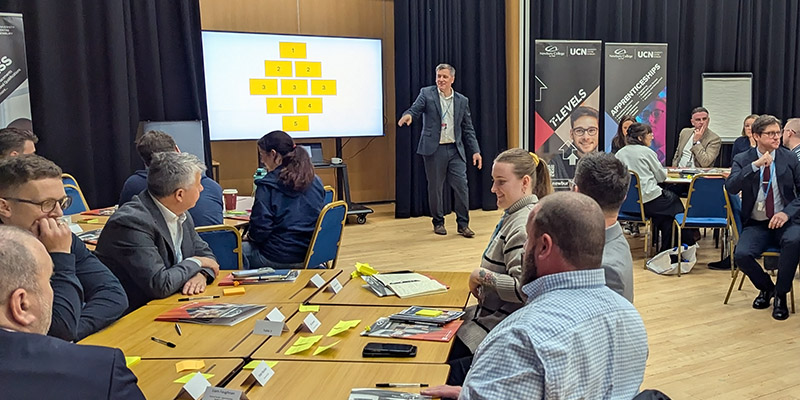
With those questions in mind, Newbury College brought together local employers and College staff for a Skills Partners Workshop on 15 April 2026. The event provided an opportunity to examine current and future workforce needs, identify priority skills gaps and discuss how education and training can better support businesses, students, apprentices and employees. Representatives from PR Motors, Ortho Surgical Skills Centre, Education Business Partnership, Penny Post, the University of Oxford, Prior's Court, The Vineyard, Environmental Solutions Waste Management and Dovetail and Slate took part in the discussion.
After a welcome from Principal Lee Probert, Deputy Principal Lee Jamieson led the workshop with a presentation on Generation Alpha and the ways this emerging workforce is already beginning to challenge traditional assumptions about learning and work. The presentation described a cohort that has grown up with digital platforms as a normal part of everyday life. It also highlighted formative influences including COVID-19, climate change awareness and digital-first communication, all of which are expected to shape the attitudes and expectations of young people entering employment in the late 2020s.
The session made clear that this is not simply a story about young people being more comfortable with technology. It is about a wider shift in behaviour, suggesting that Generation Alpha is likely to see AI as an everyday tool rather than a specialist one, and may move workplace tasks away from creating from scratch towards curating, checking and improving outputs. It also pointed to a preference for instant and visual communication, regular feedback, flexible working and a stronger focus on outcomes than on hours spent at a desk. Lee’s research highlighted that nearly 80 per cent expect flexibility to be standard and that more than 75 per cent want to be their own boss or build a side hustle.
Those ideas were then tested against the experience of local employers. Working in groups, delegates were asked to identify and rank the skills, knowledge and behaviours they most value in their industries using a diamond ranking exercise. The results were strikingly consistent. Communication appeared repeatedly. So did critical thinking, problem solving, adaptability, resilience, teamwork, independence and accountability.
That consistency matters. It shows that while businesses recognise the growing importance of digital fluency, their priorities remain firmly rooted in the human qualities that help people succeed at work. Employers want people who can think clearly, communicate well, work with others, adapt to change and respond positively to feedback. They also want people who can take responsibility, show motivation and continue learning. In other words, technical confidence matters, but it is not enough on its own.
The workshop painted a balanced picture of the opportunity ahead. Generation Alpha is likely to bring strengths that businesses can benefit from. These include confidence with digital tools, ease in blended physical and digital environments, and a willingness to question established ways of doing things. They may help employers think differently about communication, workflow and the practical use of AI. At the same time, the workshop also underlined the need to help young people develop the habits and behaviours that allow those strengths to translate into long-term success, including resilience, professionalism, sound judgement and the ability to act on feedback.
For Newbury College, this is exactly where partnership with employers is most valuable. Curriculum planning cannot happen in isolation, particularly when the world of work is changing so quickly. By bringing employers and educators together, the College can better understand where the real skills gaps are emerging and how programmes, projects, placements and apprenticeships can respond. It also helps ensure that students are not only gaining subject knowledge, but also developing the wider behaviours that employers continue to place at the top of the list.
The discussion also highlighted an important point for businesses. Preparing for Generation Alpha is not just about asking young people to fit into existing workplaces. It is also about workplaces being ready to welcome, guide and learn from them. Existing staff have a vital role to play in mentoring new entrants, modelling professional standards and helping them turn feedback into progress. In return, younger employees can bring fresh ideas, different perspectives and new confidence in the tools and technologies that are reshaping modern industry.
Newbury College is inviting employers to help shape its careers, not courses curriculum and play an active role in developing the future workforce. By working in partnership with the College, businesses can share their expertise, influence training and help create opportunities to transform lives, while supporting students and apprentices to build the skills, confidence and behaviours needed for success. Find out more on the employers section of the Newbury College website at https://newbury-college.ac.uk/employers