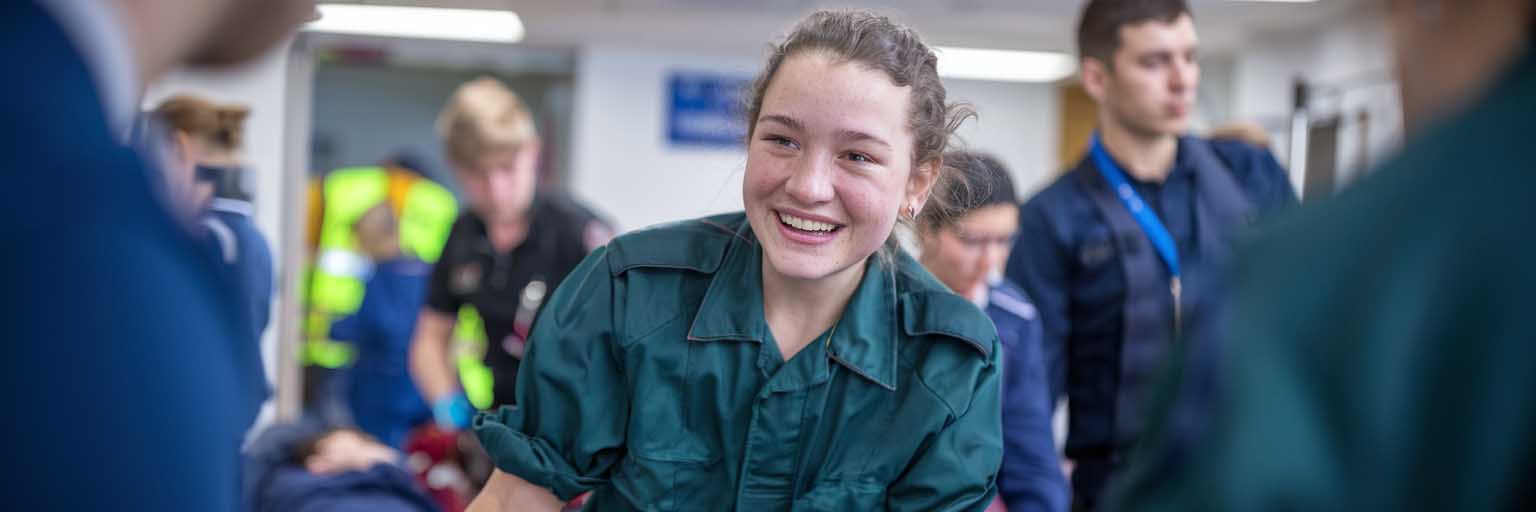
Health and Social Care Level 2
Develop the knowledge, practical experience and confidence to support people in health and social care settings. This programme explores how people grow and develop, how professionals communicate and safeguard individuals, and how good care supports health and wellbeing, alongside regular work experience in real care environments.
-
Description
Explore how health and social care professionals support people at different stages of their lives while developing the skills and behaviours needed to work responsibly in the sector.
You will combine classroom learning with practical experience, helping you connect what you study with situations you may encounter in the workplace.
You will explore:
- Human growth and development through the life stages
- Safeguarding and protection in health and social care
- Communication in care settings
- Equality, diversity and inclusion
- Nutrition and wellbeing
- Mental health and wellbeing
- Health and safety
- The principles and values of care
- Professional working practices
- Practical care skills
You will learn through discussions, case studies, projects, practical activities and workplace experience. As your confidence grows, you will begin to understand how professionals make decisions, communicate with individuals and work together to provide safe and effective care.
Alongside your sector knowledge, you will develop wider skills such as communication, teamwork, empathy, organisation, problem solving and taking responsibility for your own learning.
A Disclosure Barring Check (DBS) is required for all learners in order to work with Vulnerable Individuals. We try to work with students to identify a suitable work placement taking into consideration interests and future career aspirations.
-
Entry requirements
You will normally need:
- Five GCSEs at grade 3 or above, including English and Maths
- Or an appropriate Level 1 vocational qualification, together with equivalent English and Maths qualifications
If you have not yet achieved grade 4 in GCSE English and/or Maths, you will continue to study these alongside your Early Years programme.
Previous experience in health and social care is not required, but you should have a genuine interest in supporting other people.
You will get the most from this programme if you:
- Have a genuine interest in health, care and supporting other people
- Are patient, respectful and willing to listen
- Can communicate appropriately with different people
- Are interested in understanding people's needs
- Can work as part of a team
- Are willing to reflect on different situations and viewpoints
- Can organise your work and meet deadlines
- Can listen to feedback and use it to improve
- Are prepared to behave professionally in work placement settings
You will continue developing these skills throughout the programme, so enthusiasm, commitment and a willingness to learn are particularly important.
-
Qualification
NCFE Level 2 Extended Diploma in Health and Social Care
-
Progression
The most common next step is Health and Social Care Level 3 at Newbury College, where you can develop a deeper understanding of social care while completing further work placement experience.
Depending on your interests, experience and career plans, you could also explore apprenticeships or employment with further training.
Possible next steps include:
- Health and Social Care Level 3 at Newbury College
- A health and social care apprenticeship
- An adult care apprenticeship
- Further specialist study in health, care or wellbeing
- Entry-level employment as a care assistant or support worker
- Further training connected with mental health, community support or care services
If your experience makes you particularly interested in working with children and families, you could also explore childcare or early years pathways, subject to the relevant entry requirements.
With further study and experience, you could progress towards careers across adult social care, healthcare support, community services, mental health, social work and other professions centred on supporting people.
-
Assessment
You will be assessed through a combination of coursework, practical assessments and case studies completed throughout the programme.
Assessment may include:
- Written assignments
- Case studies
- Practical activities
- Projects
- Presentations
- Evidence linked to your work placement
These different assessment methods will give you opportunities to demonstrate both your knowledge and your ability to apply what you have learned to realistic health and social care situations.
Your tutors will provide regular feedback to help you strengthen your understanding, improve your work and develop confidence.
English and Maths, where studied alongside your programme, are assessed separately and may include exams.
-
Home study
You should expect to complete around 5 hours of independent study each week.
This may include:
- Researching health and social care topics
- Completing written assignments
- Working on case studies
- Reviewing topics covered in class
- Preparing for assessments
- Completing work placement evidence
- Responding to tutor feedback
Research is an important part of the programme and will help you develop the independent learning skills needed for progression to Level 3.
Your tutors will support your progress, but you will also be expected to take increasing responsibility for managing your workload and meeting deadlines.
-
Work placement
Work experience is a significant part of this programme.
You will normally spend two days each week in a work placement, with additional block placement weeks during the year. This gives you regular opportunities to put your learning into practice and understand what working in health and social care is really like.
Your placement will help you develop:
- Communication with individuals and professionals
- Professional behaviour
- Teamwork
- Confidence in care environments
- Understanding of workplace routines
- Awareness of safeguarding and health and safety
- Practical experience of supporting other people
You will also have opportunities to hear from professionals working in the sector and may visit different workplaces to observe how health and social care services operate.
-
Fees and additional costs
- All full-time students are asked to contribute £15 towards the College Subscription Fund
- You will need to purchase an embroidered polo shirt and/or jumper for work placement
- It is recommended that you have access to the student textbook at home, although some copies may be available to borrow
- Optional trips, visits, enrichment activities or workplace visits may have additional travel or entry costs, and you will be given information in advance
* Terms and conditions apply. The fees stated on this website are for guidance purposes only and should be checked before enrolment. Unless otherwise stated, fees shown are for tuition only, over one academic year. Where a course is longer than one academic year, the fees stated are for the first year, and the cost of the second or subsequent years will be discussed at interview. For details of fee remission for students over 19 click here. If you think you may be entitled to a concession or fee remission, or you would like more information on the additional costs associated with your chosen course, please contact us on 01635 845000 or email