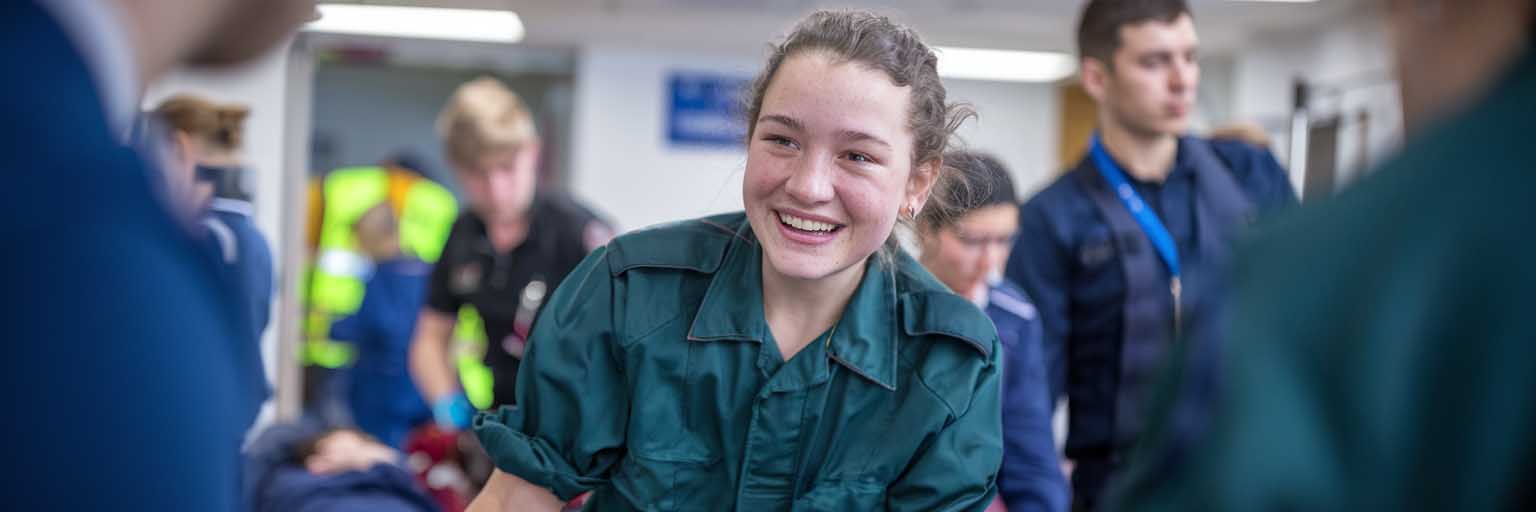
Health and Social Care Level 1 with Early Years
Explore careers in health, social care and early years while building the confidence, knowledge and skills you need for your next step. This introductory programme helps you understand how professionals support adults, children and young people, giving you a broad foundation before choosing which pathway you want to follow at Level 2.
-
Description
Discover what it is like to work in health, social care and early years settings while developing the skills and behaviours needed to support other people safely and responsibly.
You will learn about different care and education environments, the people who work within them and the principles that underpin good-quality support. The programme gives you the opportunity to explore both adult care and children's services before deciding which area interests you most.
You will explore:
- Health and social care settings
- Early years and children's settings
- Roles and responsibilities within care and education
- Communication with adults, children and young people
- Principles and values of care
- Health and safety
- Safeguarding and protecting individuals
- Equality, diversity and inclusion
- Supporting health and wellbeing
- Working effectively with other people
- Personal and professional development
Depending on the units studied, you may also explore topics such as:
- Human growth and development
- Children's development
- Play and learning
- Caring for babies and young children
- Healthy lifestyles and nutrition
- Mental health and wellbeing
- Disability awareness
- Supporting individual needs
Your learning will include classroom activities, practical tasks, discussions, projects and opportunities to explore real careers and workplace environments.
Alongside your sector knowledge, you will develop wider skills such as communication, teamwork, organisation, confidence, empathy and taking responsibility for your own learning.
-
Entry requirements
You will normally need:
- At least four GCSEs at grade 2 or above
If you have not yet achieved grade 4 in GCSE English and/or Maths, you will continue to study these alongside your main programme.
You will get the most from this programme if you:
- Have an interest in health, care, children or supporting other people
- Are patient and willing to listen
- Can treat other people with respect
- Want to develop your communication skills
- Are willing to work as part of a team
- Can follow instructions and work responsibly
- Are interested in how people grow, develop and stay well
- Are prepared to improve your organisation and timekeeping
- Can listen to feedback and use it to improve
- Want to build your confidence and independence
You will have opportunities to develop these skills throughout the programme, so you do not need to arrive with everything already in place.
-
Qualification
NCFE Level 1 Diploma in Introduction to Health, Social Care and Children's and Young People's Settings
-
Progression
One of the main benefits of this programme is that you can explore both health and social care and early years before choosing your next step.
The most common progression routes at Newbury College are:
- Health and Social Care Level 2
- Early Years Education Level 2
Depending on your interests and progress, you could also consider:
- A relevant Level 2 apprenticeship
- Further study within health, social care, childcare or education
- Entry-level opportunities that allow you to build experience before progressing further
If you are most interested in supporting adults, wellbeing, mental health or care services, Health and Social Care Level 2 may be the natural next step.
If you are more interested in babies, young children, development and education, Early Years Education Level 2 may suit you better.
With further study and experience, you could eventually progress towards careers across adult social care, healthcare support, community services, nurseries, pre-schools, schools, family support or other roles centred on helping people.
-
Assessment
You will be assessed through activities completed throughout the programme rather than one final assessment.
This may include:
- Written assignments
- Practical activities
- Projects and presentations
- Tutor observations
- Question and answer activities
- Other evidence that demonstrates your knowledge and understanding
Your tutors will provide feedback throughout the programme to help you develop your knowledge, improve your work and build confidence.
The Level 1 qualification is assessed through your programme work rather than formal written examinations.
English and Maths, where studied alongside your programme, are assessed separately and may include exams.
-
Home study
You should expect to complete a minimum of around two hours of independent study each week.
This may include:
- Completing written activities
- Researching health, social care and early years topics
- Preparing for classroom activities
- Reviewing what you have learned
- Completing assessment evidence
- Responding to tutor feedback
- Researching careers and progression routes
Independent study will help you reinforce your learning and develop the organisation and study skills you will need for progression to Level 2.
-
Work placement
You may have opportunities to take part in work experience and other activities that help you understand what working in health, social care and early years is really like.
Depending on the opportunities available during your programme, you may:
- Gain experience in an appropriate care, community or early years setting
- Meet health, social care and early years professionals
- Hear from guest speakers about different careers
- Visit care settings, nurseries, schools or community services
- Explore different roles across health, care, childcare and education
Work experience is not a mandatory requirement of the qualification, but these opportunities can help you decide which Level 2 pathway is right for you.
-
Fees and additional costs
- All full-time students are asked to contribute £15 towards the College Subscription Fund
- Optional trips, visits, enrichment activities or workplace visits may have additional travel or entry costs, and you will be given information in advance
* Terms and conditions apply. The fees stated on this website are for guidance purposes only and should be checked before enrolment. Unless otherwise stated, fees shown are for tuition only, over one academic year. Where a course is longer than one academic year, the fees stated are for the first year, and the cost of the second or subsequent years will be discussed at interview. For details of fee remission for students over 19 click here. If you think you may be entitled to a concession or fee remission, or you would like more information on the additional costs associated with your chosen course, please contact us on 01635 845000 or email