Professional Cookery Level 1
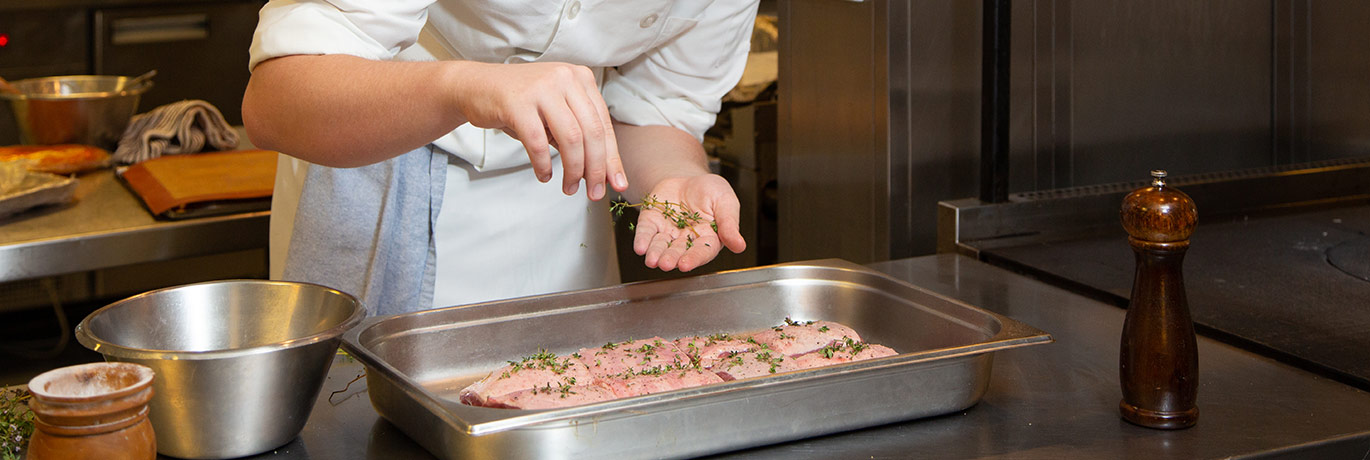
Start developing the practical skills, confidence and kitchen knowledge you need for a career in food and hospitality. This hands-on programme introduces you to professional cookery through practical kitchen sessions, giving you the opportunity to prepare and cook dishes, use professional equipment and experience how a working kitchen operates.
-
Description
Learn by doing as you develop essential cookery skills in a professional kitchen environment.
You will start with the techniques, knowledge and working practices used in professional kitchens. As your confidence grows, you will prepare a wider range of ingredients and dishes, develop your knife skills and learn how to organise your work safely and efficiently.
You will explore:
- Basic food preparation techniques
- Knife skills
- Safe use of kitchen tools and equipment
- Preparing and cooking vegetables
- Preparing and cooking meat
- Preparing and cooking fish
- Introduction to baking
- Preparing desserts
- Portion control
- Food presentation
- Food safety and hygiene
- Working safely in a professional kitchen
- Teamwork and communication
Practical sessions will give you regular opportunities to develop your techniques through demonstration, guided practice and repeated experience. You will learn how to prepare ingredients, follow recipes, organise your workspace and work safely as part of a kitchen team.
Alongside your cookery skills, you will develop wider skills such as communication, teamwork, organisation, time management, confidence and preparing for the world of work.
-
Entry requirements
You will normally need:
- At least four GCSEs at grade 2 or above
If you have not yet achieved grade 4 in GCSE English and/or Maths, you will continue to study these alongside your main programme.
You will get the most from this programme if you:
- Have a genuine interest in food and cookery
- Enjoy practical, hands-on learning
- Are willing to try new ingredients and techniques
- Can work as part of a team
- Are prepared to work in a busy kitchen environment
- Can listen to instructions and follow safe working practices
- Are willing to practise techniques to improve your skills
- Can listen to feedback and use it to improve your work
- Are willing to become more organised and responsible for your own work
You do not need to arrive with professional cooking skills. An interest in food, a positive attitude and a willingness to learn and practise are more important.
-
Qualification
VTCT Level 1 Diploma in Introduction to Professional Cookery Studies
-
Progression
The most common next step is Professional Cookery Level 2 at Newbury College, where you can develop a wider range of cookery and hospitality skills and work towards greater independence in a professional environment.
Depending on your interests and progress, you could also explore apprenticeships or entry-level employment within the hospitality industry.
Possible next steps include:
- Professional Cookery Level 2 at Newbury College
- A hospitality or catering apprenticeship
- Kitchen assistant roles
- Entry-level food preparation roles
- Further training in professional cookery or hospitality
With further training and experience, you could progress towards roles such as commis chef, chef or other careers within professional kitchens and the wider hospitality industry.
-
Assessment
The Professional Cookery qualification is assessed through a combination of practical assessments and assessments of your knowledge and understanding.
Your practical skills will be assessed as you prepare and cook food in the kitchen. You will need to demonstrate that you can follow safe working practices, use equipment correctly, organise your work and apply the techniques you have developed.
Your knowledge may also be assessed through written or oral activities covering the theory behind your practical work.
Your tutors will provide feedback throughout your practical sessions and assessments to help you refine your techniques, develop your confidence and build evidence of your achievement against the assessment criteria.
English and Maths, where studied alongside your programme, are assessed separately and may include exams.
-
Home study
You will complete regular independent work outside your timetabled sessions.
This may include:
- Researching ingredients, dishes and cooking techniques
- Reviewing food safety and hygiene
- Revising cookery theory
- Preparing recipes for practical sessions
- Creating time plans for assessments
- Preparing for practical and knowledge assessments
- Reviewing feedback from your practical work
Preparing recipes and time plans before practical assessments will help you organise your work effectively and make the most of your time in the kitchen.
Your tutors will review your progress and provide feedback, but you will also be expected to become increasingly responsible for preparing for practical sessions and completing work on time.
-
Work placement
You will take part in practical experiences that help you understand how professional kitchens and hospitality businesses operate.
You will have opportunities to gain experience through the College's in-house restaurant and canteen, developing skills in food production and front of house service.
Depending on the opportunities available during your programme, you may also:
- Take part in work placements with external hospitality businesses
- Experience busy commercial kitchen environments
- Meet chefs and other hospitality professionals
- Hear from industry speakers about their roles and career routes
- Visit workplaces to see professionals in action
- Develop customer service and front of house skills
These experiences will help you build confidence, understand professional standards and see how the skills you develop in College are used in the hospitality industry.
-
Fees and additional costs
- All full-time students are asked to contribute £15 towards the College Subscription Fund
- You will be advised to have chef's uniform and suitable kitchen clothing
- A set of professional knives and other basic equipment may be recommended
- Cookery books, files, pens and front of house clothing may also be required
- Students under 18 will have access to the equipment needed to complete their studies
- Details and approximate costs will be discussed before enrolment
- Optional visits to workplaces, exhibitions or shows may have additional entrance or travel costs
- You may be advised to purchase textbooks or other subject-specific resources, and details will be provided in advance
* Terms and conditions apply. The fees stated on this website are for guidance purposes only and should be checked before enrolment. Unless otherwise stated, fees shown are for tuition only, over one academic year. Where a course is longer than one academic year, the fees stated are for the first year, and the cost of the second or subsequent years will be discussed at interview. For details of fee remission for students over 19 click here. If you think you may be entitled to a concession or fee remission, or you would like more information on the additional costs associated with your chosen course, please contact us on 01635 845000 or email